Springs
Torsion vs Extension Garage Door Springs
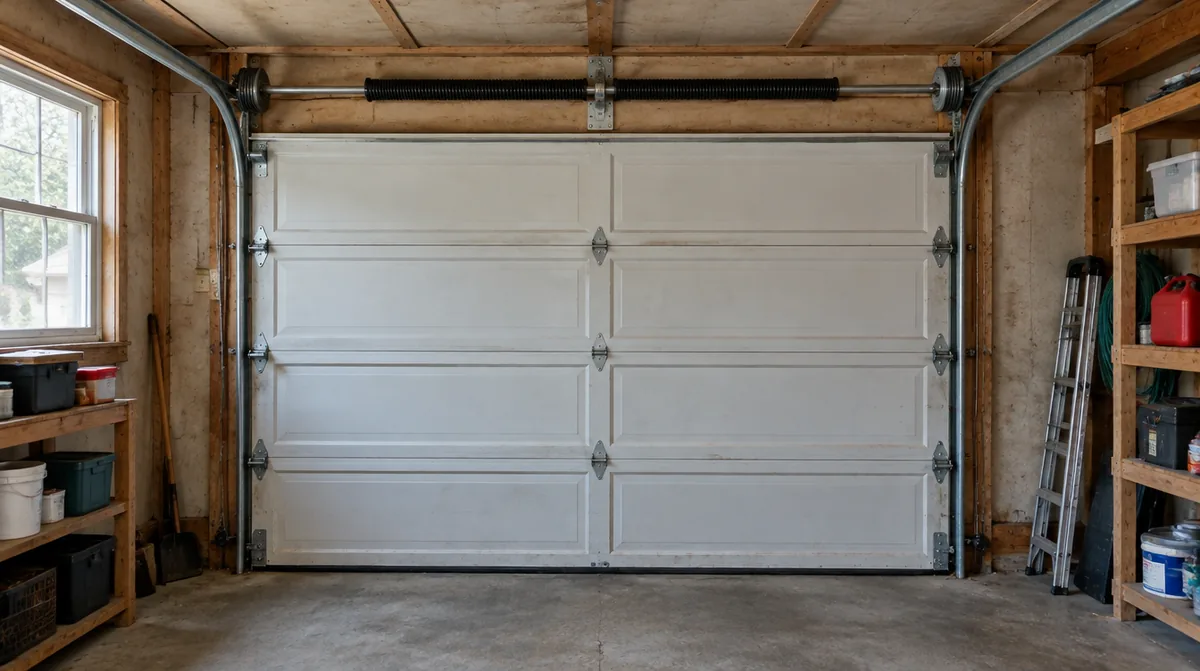
Every sectional garage door relies on springs to offset its weight. Comparing torsion vs extension garage door springs comes down to where the spring sits and how it stores energy. Both do the same job. They just do it in different ways, and that changes how they wear, how they fail and how they are repaired.
How Each Type Works
Torsion springs
A torsion spring mounts on a steel shaft above the door opening. When the door closes, cables wound on drums at each end of the shaft turn it, and the spring twists tighter. That twisting stores energy. When the door opens, the spring unwinds and turns the shaft, and the drums reel the cables in to lift the door.
Extension springs
Extension springs sit above the horizontal tracks on both sides of the ceiling. They stretch as the door closes and pull back as it opens. A cable and pulley on each side link the spring to the bottom corner of the door. When they are fully stretched you can see the coils open up.
How to Tell Which One You Have
Stand in the garage and look up. A thick coil running across the wall just above the door means torsion. Long springs running front to back over each track mean extension. Some light single-car doors use one torsion spring, while heavier double doors often use two.
Older homes tend to have extension springs, since that was the common setup for many years. Plenty of houses still have them and they work fine when set up properly.
Side by Side
- Balance: torsion springs lift both sides of the door through one shaft, so the door tends to travel more evenly. Extension springs work on each side separately, so a weak side can make the door lift unevenly.
- Safety when they break: a broken torsion spring stays on its shaft. A broken extension spring can whip loose unless a safety cable runs through its centre. If your extension springs have no containment cable, ask about adding one.
- Space: extension springs need clear room above the tracks. Torsion springs need a few inches of headroom above the door.
- Wear: both are rated by cycles. Neither type lasts forever, and the right size matters more than the type.
- Adjustment: torsion springs are wound with winding bars under high tension. Extension springs are adjusted by moving hooks or pulleys. Both carry stored energy and both are best left to a trained technician.
Can You Switch From One to the Other?
Many doors can be converted from extension to torsion. It means new hardware: a shaft, drums, bearing plates, a centre bracket and correctly sized springs. Whether it makes sense depends on the door, the headroom and the condition of the tracks. It is not required. A well matched extension system can serve a door for many years.
What Changes When You Replace Springs
Springs are not one size fits all. The wire gauge, the inside diameter, the length and the wind direction must suit your door's weight and height. A spring that is too weak makes the opener do the lifting. A spring that is too strong makes the door fly up and fight the closing motion. With extension springs, both sides should be replaced together so they pull evenly. The same reasoning applies to a pair of torsion springs.
If you think your spring has already failed, read how to tell if a garage door spring is broken. For details on the repair work, our garage door spring repair page covers both spring types. Homeowners in Glen Ridge can find local service details on their own page.
You can call (973) 400-5103 or use Get Estimate whenever you want a spring looked at.