Openers
Why Your Garage Door Reverses Before Closing
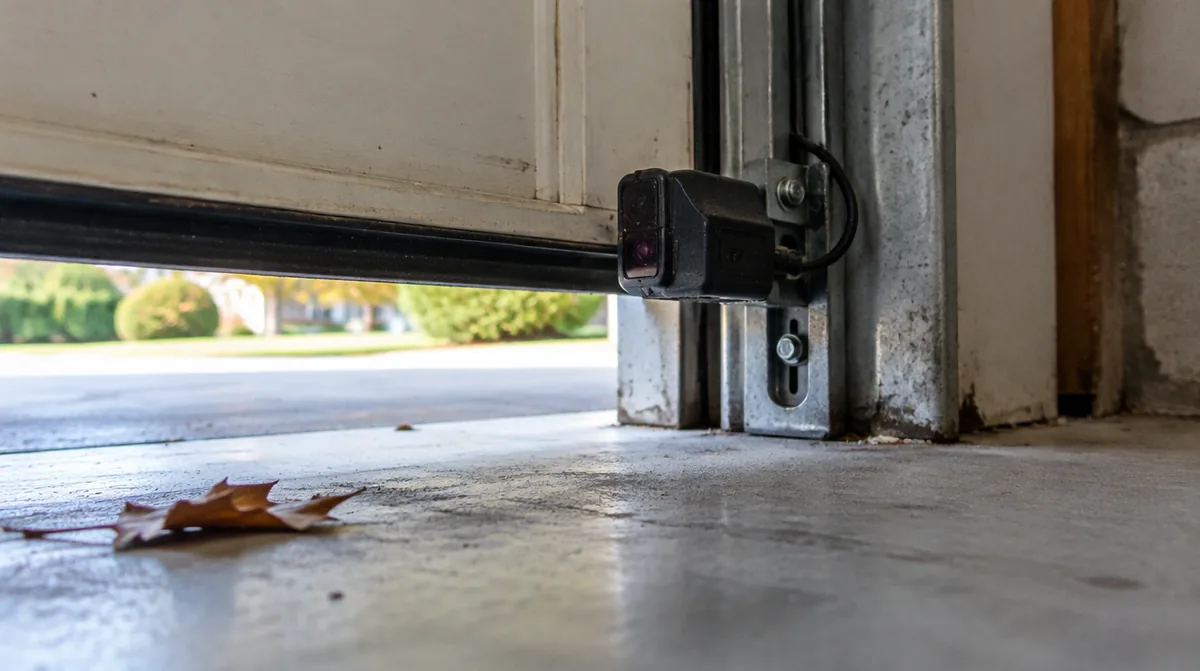
When a garage door reverses before closing, the opener is usually doing exactly what it was designed to do. Modern openers reverse when they think something is in the way. The trick is working out what the opener believes it sees or feels. In most homes the answer is one of four things, and you can check most of them in a few minutes.
Start With the Safety Sensors
Near the bottom of each track sits a small sensor, a few inches above the floor. One sends an invisible beam and the other receives it. If the beam is broken while the door is closing, the opener sends the door back up. Each sensor usually has a small light. A steady light on both means they see each other. A blinking or dark light means trouble.
Common sensor problems
- Dirt, cobwebs or a smudge on the lens. Wipe both lenses with a soft cloth.
- Misalignment. A bumped sensor can tilt just enough to miss its partner. Loosen the wing nut, aim it back, and tighten it.
- Bright sunlight. Low morning or evening sun shining straight into the receiving sensor can blind it. Some homeowners notice the problem only at certain times of day.
- Damaged wiring. Thin low voltage wires run along the wall to each sensor. A staple through a wire or a chewed section can cause intermittent faults.
Look for Something in the Way
Check the floor under the door and the tracks on both sides. A rake handle, a kid's ball, a heap of leaves or packed snow and ice at the threshold can all cause a reversal. The opener also reverses if the door meets resistance on the way down. Run your eye along each track for dents, bent sections or a roller that has jumped its channel.
Force and Travel Settings
Openers have settings that control how far the door travels and how much resistance it accepts before reversing. If the close travel is set too far, the door hits the floor, the opener reads that as an obstruction, and it reverses. If the force setting is too sensitive, normal friction from cold stiff rollers can trigger a reversal. Seasonal changes in the door can make settings that worked in summer misbehave in January.
Adjustment knobs or buttons are on the motor unit, and the opener manual explains them. Make small changes only. Turning force up to stop reversals can defeat the safety system, which is a real hazard to children and pets. After any adjustment, test by placing a piece of wood flat on the floor under the door. The door should reverse when it touches it.
When the Door Itself Is the Problem
Sometimes the opener is fine and the door is fighting it. A broken spring, a frayed cable, worn rollers or a binding track all make the door harder to move. The opener senses the extra load and reverses. If the door is heavy or jerky when operated by hand, the problem lies in the hardware, not the electronics. Our article on what makes a garage door noisy covers several of these wear points.
When to Call for Help
If you have cleaned and aligned the sensors, cleared the path and the door still reverses, it is time for a closer look. A technician can test the sensor circuit, check the logic board and the limit settings, and inspect the door's balance. The page on garage door opener repair explains what that service involves. Homeowners in Montclair and around Nutley can reach the same team.
Call (973) 400-5103 or choose Get Estimate to schedule garage door service.