Maintenance
What Makes a Garage Door Noisy
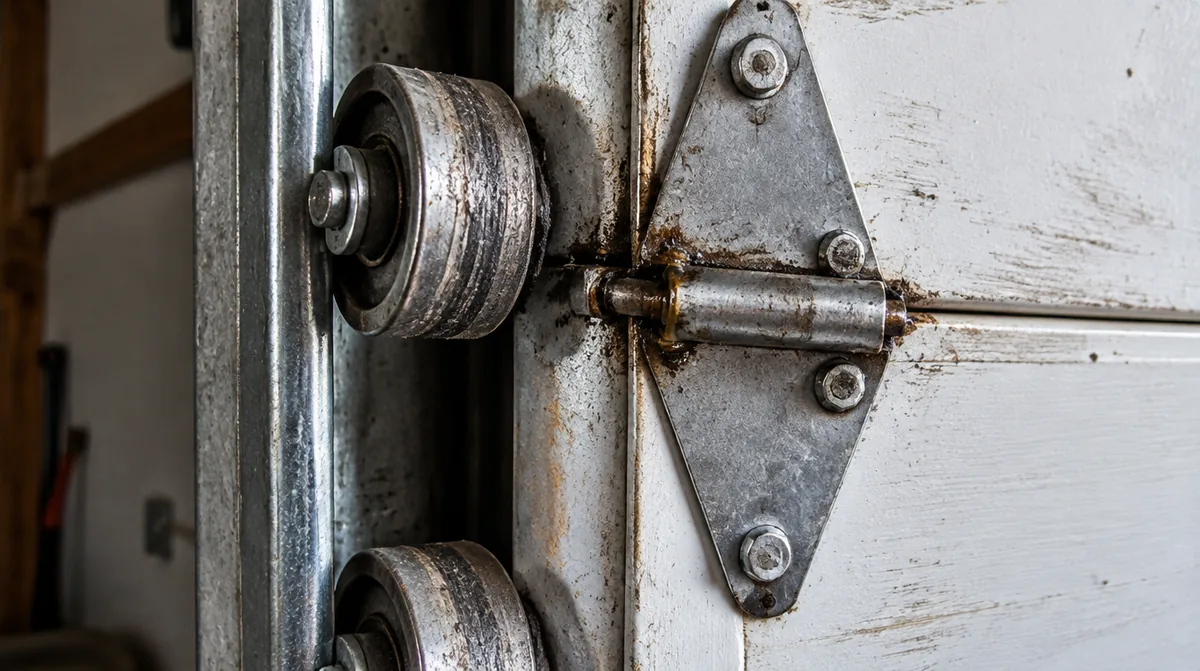
Every garage door makes some sound, but a noisy door is often trying to tell you something. The common causes of a noisy garage door fall into a few groups: rollers, hinges, springs, tracks and the opener. Each makes its own kind of noise. Listen carefully and you can usually narrow it down before anyone picks up a tool.
Match the Sound to the Source
Squeaking or squealing
High pitched squeaks usually come from metal on metal. Dry hinges, dry roller bearings and dry spring coils are the usual suspects. A garage door lubricant on the hinges, roller bearings and springs often quiets them. Do not grease the inside of the tracks, because that collects dirt and makes rollers skid.
Grinding
Grinding often means worn roller bearings or a roller rubbing against a bent track. On the opener side, a stripped drive gear or a dry chain can grind. If the sound comes from the motor unit, it is an opener issue. If it follows the door as it travels, look at the rollers and tracks.
Rattling
Loose hardware rattles. Over many cycles, the vibration of a door can back out the bolts on hinges and track brackets. Snug them gently with the right socket. Do not touch the bottom brackets on each corner, because they are connected to the lift cables and are under tension.
Popping or banging
A popping noise when the door moves can come from a spring that is dry and sticking, or from a door that is out of balance and jerking. A single loud bang from an idle garage is a different story. That usually means a spring has broken.
Scraping
Scraping can mean a roller has come partly out of its track, a cable is rubbing, or the bottom seal is dragging on the floor. A scraping cable is worth checking soon.
Rollers Make the Most Difference
Many older doors use unsealed steel rollers. They are loud by nature and wear quickly. Nylon rollers with sealed bearings run much more quietly. Swapping rollers is a common upgrade, but the bottom rollers sit in brackets attached to the lift cables, so that part is best done by someone trained.
The Opener Can Be the Noise
Chain drive openers are noisier than belt drive models. A chain that is too loose slaps against its rail. Tightening it a little often helps. A worn gear or failing motor can whine or grind. If the opener is noisy but the door runs quietly by hand, the opener is the source.
When Noise Is a Warning
- A new creak after a cold night may be a spring near the end of its life.
- A grinding that gets worse each week usually means a bearing or gear is failing.
- A scraping cable can fray and snap.
- A door that jerks or shudders is fighting something.
If a spring looks rusty, stretched or has a gap, read how to tell if a garage door spring is broken. Springs are a common source of noise and a common repair, covered on our garage door spring repair page.
Keeping It Quiet
Lubricate moving metal parts a couple of times a year. Check hardware for looseness. Replace cracked rollers. Keep tracks clean and clear. Our garage door maintenance checklist walks through a full yearly routine. Homeowners in Rutherford can find local service details on their page.
When the noise is more than a squeak, call (973) 400-5103 or use Get Estimate.