Seasonal
Getting Your Garage Door Through a New Jersey Winter
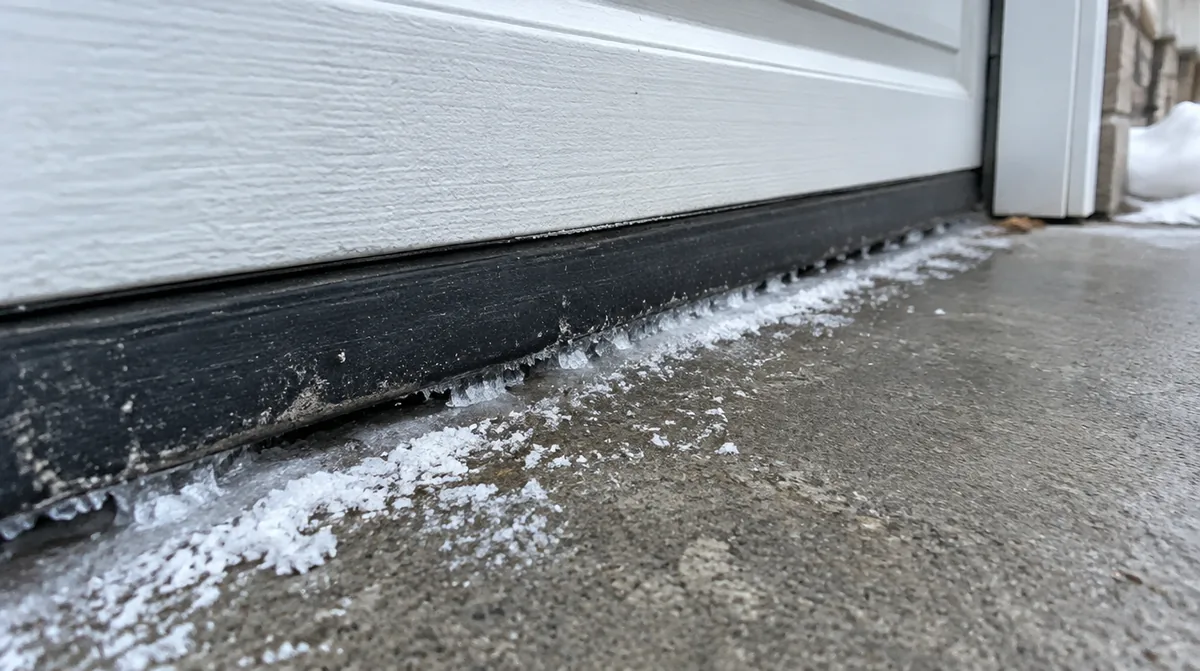
North Jersey winters bring freezing nights, thaws, slush and road salt, and garage doors feel all of it. Most garage door cold weather problems show up as a door that sticks, groans or refuses to close. Few of them come out of nowhere. A little preparation in the fall and some sensible habits on cold mornings prevent most of the trouble.
What Cold Does to a Garage Door
Grease thickens
Lubricant on rollers, hinges and the opener rail stiffens in the cold. The door moves with more resistance, and the opener has to push harder. Some openers read that extra resistance as an obstruction and reverse.
Metal contracts
Steel tracks, springs and hardware shrink slightly in low temperatures. That can make loose parts looser and tight parts tighter. It is one reason a door that ran fine in October can bind in January.
Seals freeze to the floor
Melting snow drips off cars and runs under the door. Overnight it freezes, and the rubber bottom seal is glued to the concrete. The opener strains, the motor hums, and the seal can tear.
Springs give out
Cold does not make a healthy spring break. A spring that was already near the end of its life, though, often fails on a frigid morning. Our article on how long garage door springs last explains why.
Preparing Before the First Freeze
- Lubricate hinges, roller bearings and springs with a garage door lubricant. Skip the inside of the tracks.
- Check the bottom seal. A cracked or flattened seal lets in water and cold air. It is usually a simple part to replace.
- Clear the threshold. Fill or slope low spots near the door where water pools.
- Test the balance and the auto reverse. Doing it now beats finding a problem in a snowstorm.
- Replace remote and keypad batteries. Cold drains weak batteries fast.
On Cold Mornings
If the door will not lift, look at the bottom first. A frozen seal can usually be freed by chipping the ice along the floor with a plastic scraper. Do not keep pressing the button while it is stuck, because the opener can strip a gear or pull the seal off. Avoid pouring hot water at the threshold, since it refreezes into a worse sheet of ice.
If the door reverses on the way down, check for ice or packed snow under it, then check the safety sensors. Snow piled against a sensor can block its beam. Our article on a door that reverses before closing covers the full list.
Road Salt and Rust
Cars carry salty slush into the garage all winter. When it melts, the brine splashes on the lower door panels, the bottom brackets and the track ends. Over time it rusts steel and weakens hardware. Rinse the lower panels on a mild day and wipe down the bottom of the tracks. Keeping the garage floor drained helps protect springs and cables too.
The Opener in Winter
Opener motors work hardest in the cold. Some openers allow the force setting to be adjusted, but turning it up to beat the cold can weaken the safety reversal, so make small changes only. Better to fix the cause: lubricate, free the seal and confirm the door is balanced. If the opener strains even when the door moves freely by hand, see our page on garage door opener repair. Homeowners in Verona can find local details on their page.
When winter gets the better of your door, call (973) 400-5103. Emergency garage door repair is available 24/7.