Older Homes
Garage Doors in Older Essex and Bergen County Homes
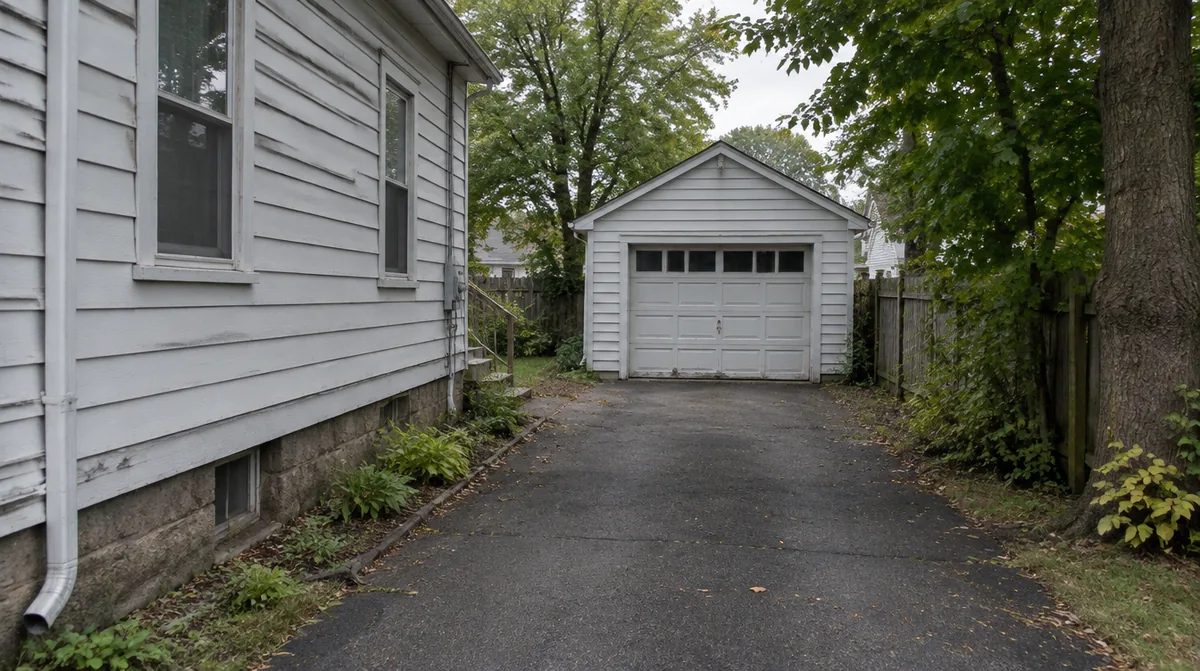
Much of the housing across Essex and Bergen counties was built long before modern garage doors. Many older home garage door problems come from that history. Garages built for smaller cars, framing that has settled over decades, heavy wood doors and openers added years after the garage went up all create their own patterns of wear. If your home has some age on it, here is what tends to come up.
Older Garage Layouts
Detached and narrow garages
Older lots often have a detached garage at the end of a driveway, sometimes sized for the cars of an earlier era. Narrow openings and tight side room can limit which hardware fits.
Low headroom
A standard torsion setup needs a certain amount of space above the door. Some older garages have low ceilings or beams in the way. Low headroom hardware exists for these situations, and extension springs are another common answer.
Settled framing
Wood framing around the opening can shift or soften with age. Track brackets screwed into weak wood can loosen, and the opening may no longer be perfectly square. A door that rubs at one side or sits crooked may be reacting to the frame, not just its own hardware. Our article on why a garage door hangs unevenly covers other causes.
The Doors Themselves
Heavy wood doors
Solid wood doors are handsome but heavy. They need correctly sized springs, and they can absorb moisture, swell and warp. Peeling paint at the bottom edge often means the wood is taking in water.
Older steel doors
Uninsulated single layer steel doors dent easily and let cold through. They are lighter than wood, which is easier on springs and openers.
Extension springs without safety cables
Many older setups use extension springs. If yours do not have a containment cable running through the centre of each spring, a break can send pieces flying. Adding safety cables is a simple, worthwhile fix. See torsion vs extension springs for how the two systems compare.
Older Openers
An opener installed decades ago may predate photo eye sensors and modern auto reverse requirements. It may also be running a door heavier than it was designed for. Signs it is struggling include humming, slow travel and frequent reversals. A technician can tell you whether the unit can be repaired or should be replaced for safety.
Moisture and Floors
Older garage slabs can crack, settle and slope toward the door, letting water collect at the threshold. Water rots wood door bottoms and rusts steel hardware. In winter it freezes the bottom seal to the floor. A new seal, a threshold strip or regrading the apron can help.
Caring for an Older Door
Older doors have often been repaired before, sometimes more than once. Mixed parts are common: one spring replaced years after the other, a cable of a different size, or brackets added to fix an earlier problem. A careful look at what is actually installed matters more than the age of the door itself.
- Keep springs and hinges lubricated.
- Check that track brackets are tight in sound wood.
- Repaint or seal wood doors to keep moisture out.
- Replace a worn bottom seal before winter.
- Test the balance and the auto reverse a couple of times a year.
Our garage door maintenance checklist walks through each step.
Getting Help
Older doors reward a technician who takes the time to check the whole system rather than a single part. The garage door repair service covers springs, cables, rollers, tracks and openers on doors of every age. Homeowners in Wood-Ridge can find local details on their page.
Call (973) 400-5103 or use Get Estimate to schedule a visit.